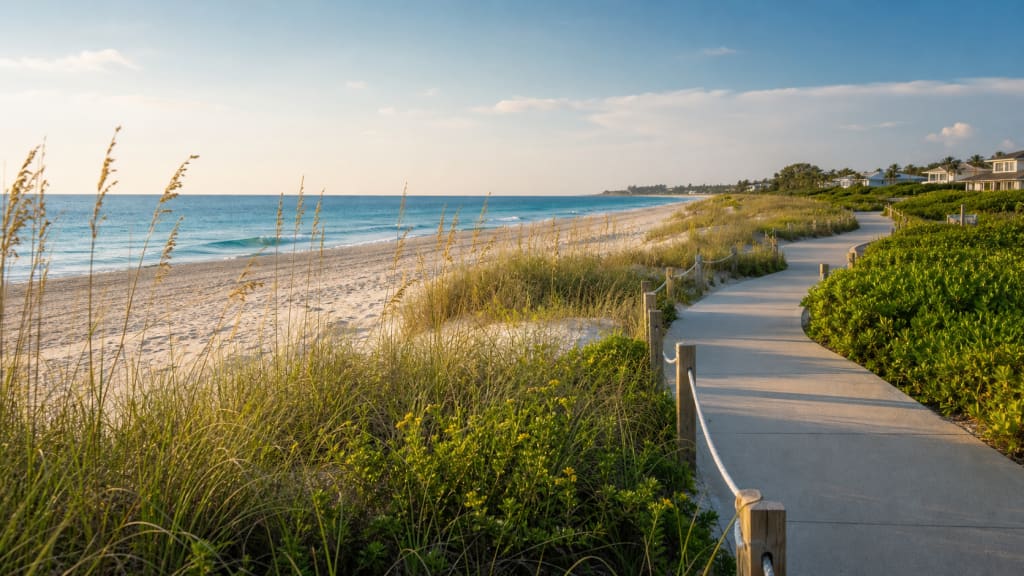

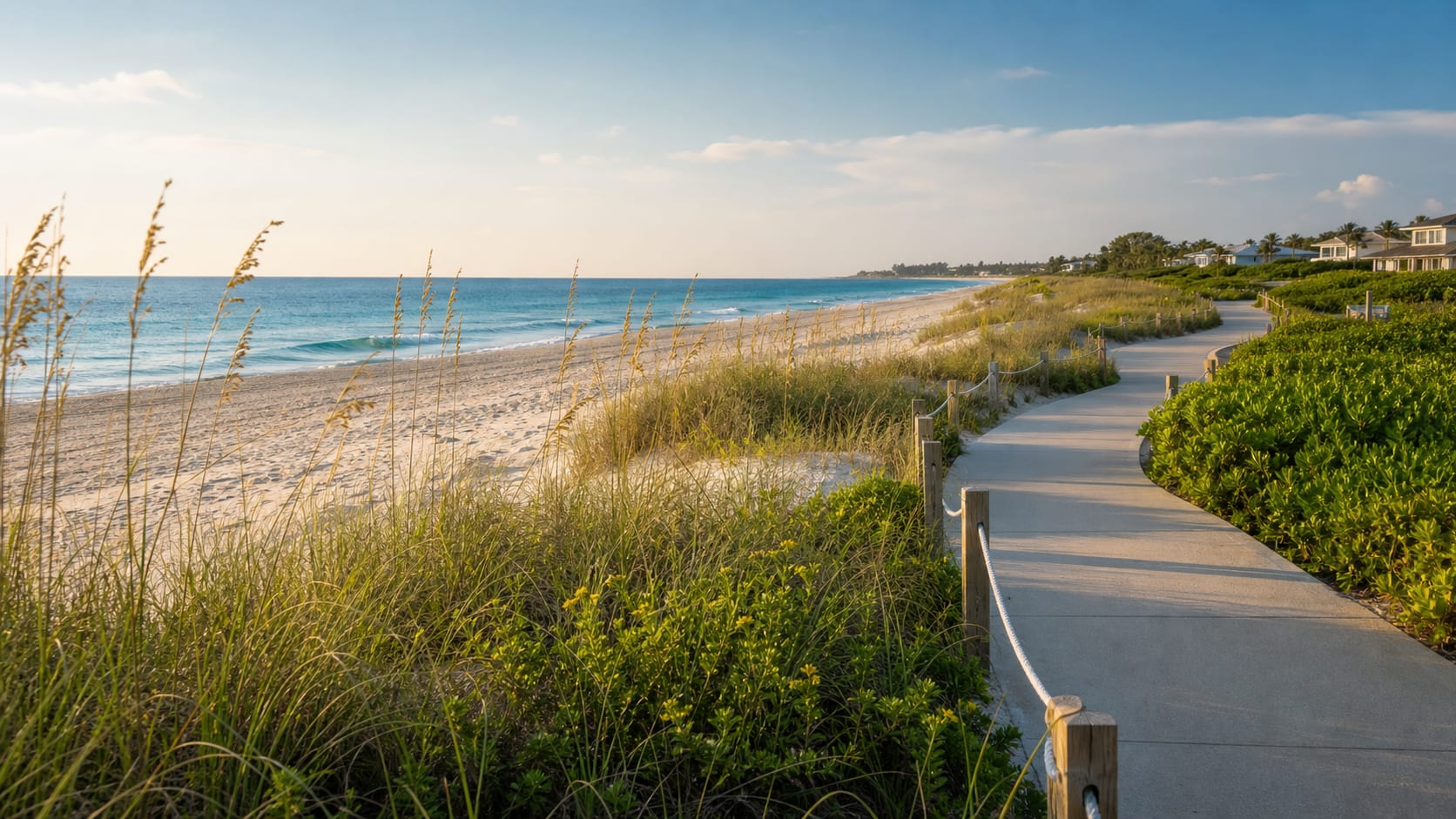

Juno Beach has a way of making coastal living feel grounded in everyday life. The Atlantic Ocean is always close, but so are neighborhood streets, parks, restaurants, shopping, and the major corridors that connect northern Palm Beach County. For buyers comparing oceanfront communities, that combination of scenery and practicality is a major part of the town's appeal.
This guide looks at the details that shape a Juno Beach home search: beach access, Pelican Lake, local recreation, the mix of single-family homes and condominiums, and the property-level factors that can matter long after closing.
Oceanfront Character With Practical Connections
Juno Beach sits between the Atlantic and the Intracoastal area, just east of U.S. 1. It feels distinctly coastal without being disconnected from the rest of the region. Palm Beach Gardens, Jupiter, North Palm Beach, and major shopping and dining destinations are all within an easy drive, while Ocean Drive and nearby residential streets maintain a quieter rhythm.
That balance is important. Some buyers want to walk to the sand or see the water from home. Others care more about having the beach nearby while keeping a simple route to work, appointments, dining, or the airport. Juno Beach can support both priorities, depending on the exact address and property type.
The town's scale also gives it a recognizable identity. Rather than one large master-planned community, Juno Beach is a collection of oceanfront and near-ocean condominium buildings, established neighborhoods, townhomes, and single-family homes. The experience can change noticeably from one block or building to the next, which makes an in-person comparison especially valuable.
In Juno Beach, location is rarely just a pin on a map. Distance to the shoreline, building orientation, traffic patterns, view protection, parking, and the route to daily errands can all influence how a home feels.
Pelican Lake, Beach Access, and an Outdoor Rhythm
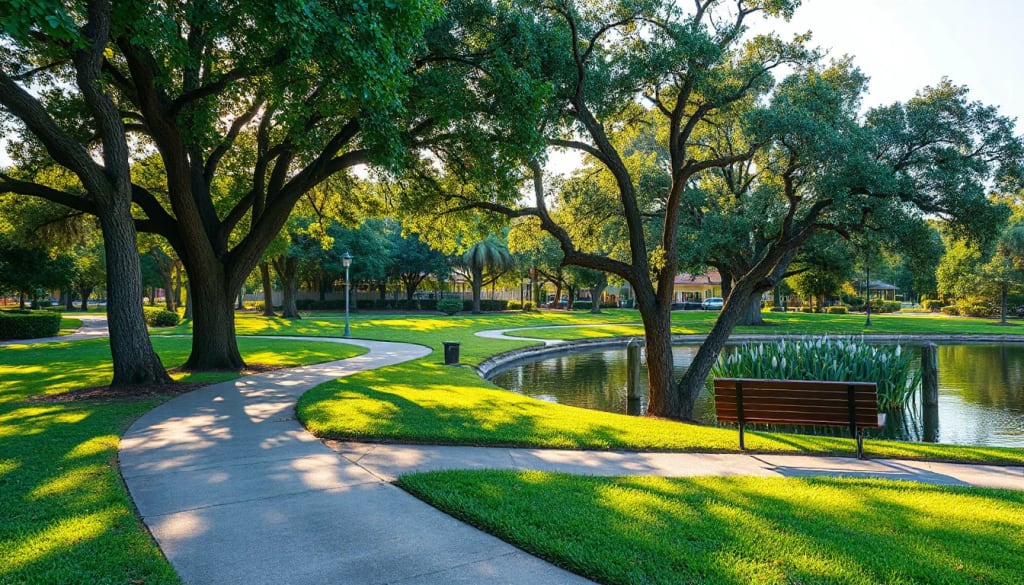
The ocean is the headline, but it is not the only outdoor draw. Pelican Lake is a 12-acre town landmark with a paved loop of about one mile, along with gazebos, benches, picnic tables, landscaping, and opportunities to watch local waterfowl. It offers a different kind of outdoor time from the beach: shaded pauses, casual walks, and a convenient route through the center of town.
Beach access points and nearby parks make it easy to build time outside into a normal day. Residents can take a morning walk, check the water after work, or spend a weekend close to home without needing a complicated plan. That ease is one reason buyers often focus on the precise walking or driving route from a property to the shoreline rather than relying only on straight-line distance.
Loggerhead Marinelife Center is another defining local institution. Its sea turtle hospital, educational exhibits, research, and conservation work connect the community to the ecology of the coast. The center and surrounding park help give Juno Beach an identity that is not only recreational, but also closely tied to ocean stewardship.
The Juno Beach Park and pier area is a familiar landmark for fishing and ocean views. Because Palm Beach County began a pier refurbishment project in June 2026, anyone planning a visit should check the county's current pier updates for the latest access information.
For homeowners, these amenities can influence more than weekend plans. They can shape morning routines, guest experiences, and which transportation tradeoffs feel worthwhile. A condo a few steps from the beach may offer a different kind of convenience than a single-family home with more space, privacy, and parking a little farther inland.
Housing Choices Range From Oceanfront Condos to Established Homes
Juno Beach offers several distinct paths to ownership. Oceanfront and near-ocean condominiums can provide views, shared amenities, and lower-maintenance living. Townhomes and smaller communities may offer a middle ground between condominium convenience and the feel of a private residence. Single-family homes can provide more autonomy, outdoor space, and renovation flexibility.
Those categories are only a starting point. In condominium buildings, floor height, orientation, balcony exposure, parking, storage, reserves, planned projects, and leasing rules can materially affect value and day-to-day use. Two units with similar square footage may have very different carrying costs or long-term considerations.
For single-family homes, buyers often compare roof age, impact protection, drainage, lot layout, mechanical systems, and renovation quality. Proximity to the ocean can make construction details and insurance conversations especially important. A beautiful kitchen matters, but so do the less visible systems that help a coastal property perform over time.
View language also deserves careful attention. “Ocean view,” “oceanfront,” and “walk to the beach” can describe very different experiences. Buyers benefit from visiting at different times of day, standing in the actual rooms and balconies that matter most, and confirming whether a view depends on a neighboring parcel remaining unchanged.
For sellers, clarity wins. Strong photography, accurate descriptions, organized records, and a straightforward explanation of updates and monthly costs help buyers compare a property with confidence. In a market with varied building ages and property types, preparation can be as important as presentation.
Why Buyers Compare Juno Beach With Nearby Coastal Communities
Juno Beach is often part of a broader search that includes Jupiter, Singer Island, North Palm Beach, and eastern Palm Beach Gardens. Each area offers a different mix of beach proximity, boating access, golf, newer construction, nightlife, and community amenities.
What keeps Juno Beach distinctive is its direct relationship with the Atlantic. The beach, conservation landscape, Pelican Lake, and compact town setting are central to the experience rather than occasional extras. At the same time, U.S. 1 and Donald Ross Road provide practical connections to the wider area.
That does not make one town universally better than another. It makes the comparison more specific. A buyer prioritizing private dockage may focus elsewhere. A buyer who wants a guard-gated golf community may lean inland. Someone who values frequent beach time, an ocean-oriented routine, or a smaller coastal setting may keep coming back to Juno Beach.
The best decision usually becomes clear when buyers compare complete ownership experiences rather than just listing photos. Purchase price, monthly fees, insurance, reserves, parking, renovation needs, commute patterns, and the way a property fits everyday routines all belong in the same conversation.
What to Watch in the Juno Beach Market
Juno Beach does not move as one uniform market. Oceanfront condominiums can follow a different pace from townhomes or single-family properties. Renovated inventory may compete in a separate lane from homes that need significant work, and even neighboring buildings can have very different financial profiles.
Buyers should study recent sales at the building or neighborhood level whenever possible. In condos, that means comparing unit position, view, floor, condition, parking, reserves, assessments, and monthly fees. For houses, lot quality, construction, system ages, and proximity to the ocean may be more meaningful than a broad price-per-square-foot average.
Due diligence should be equally specific. Review association documents, available inspection information, insurance considerations, building projects, and restrictions with the appropriate professionals. Coastal ownership can be deeply rewarding, but the best decisions are made with both the view and the underlying details in focus.
Sellers should expect informed buyers to ask detailed questions. A property that is priced from relevant local comparisons, presented in strong condition, and supported by organized documentation is easier to evaluate and easier to trust. That matters in every market, but especially where carrying costs and building variables can differ so widely.
Local Guidance Makes the Comparison Easier
Juno Beach delivers more than a postcard setting. It offers an everyday coastal experience shaped by the Atlantic, Pelican Lake, conservation, outdoor access, and a housing market with meaningful variety. The right property may be an oceanfront condo, an established single-family home, or something in between.
For buyers, the goal is to match the address, ownership structure, and long-term costs with the way you actually want to live. For sellers, the opportunity is to show buyers exactly what makes the property practical, distinctive, and well positioned within its segment.
Abby and Matt Baker help buyers and sellers compare Juno Beach opportunities with neighborhood-level context, careful property review, and a clear strategy from first conversation through closing. If Juno Beach is part of your Palm Beach County real estate plans, start a conversation about the properties and priorities that matter to you.